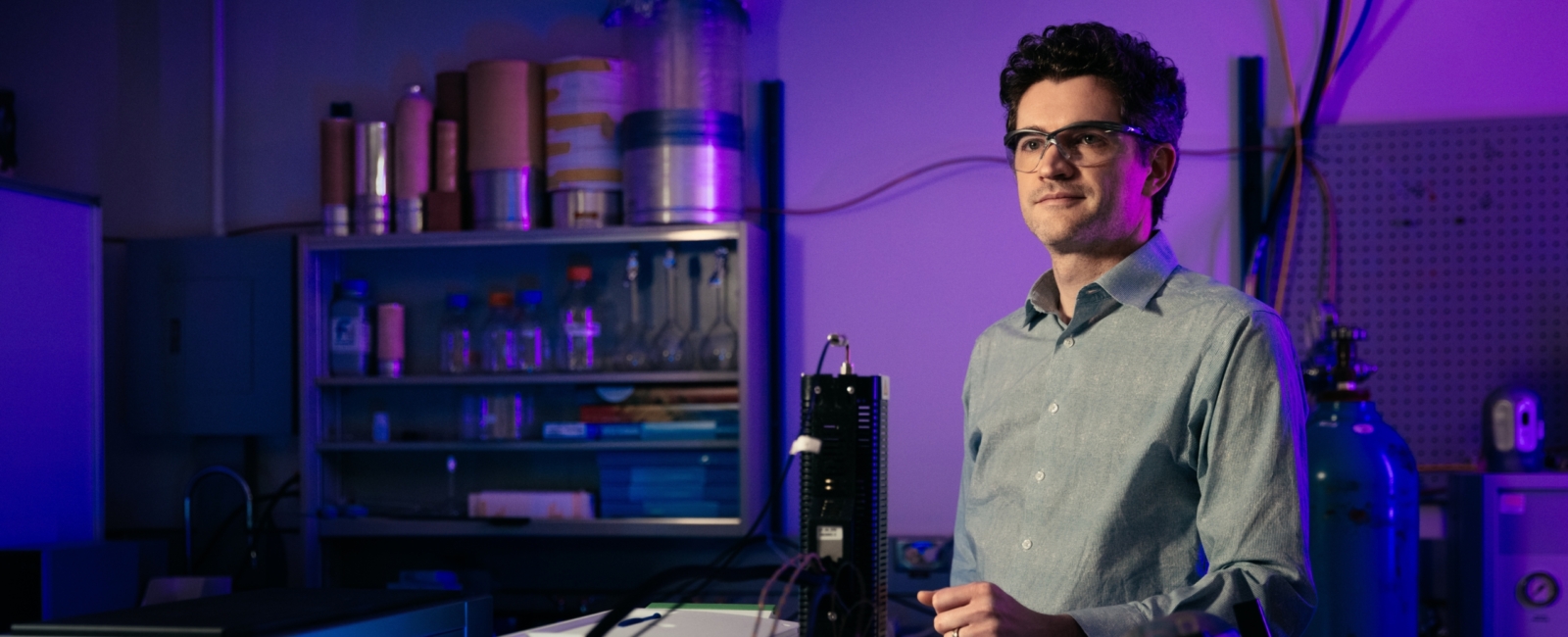
InnoTech Alberta offers one-of-a-kind hydrogen quality testing.
When it comes to hydrogen gas, quality matters. The substance is critical to several economic sectors, with uses ranging from fertilizer production to energy generation.
Before it can be used in a commercial application, hydrogen must be analyzed and measured by a third party to verify it meets industry-specific quality grades.
“The most basic uses for hydrogen are oil upgrading and refining, petrochemicals, and fertilizer production. Those applications can tolerate more impurities than in others,” explains Martin Huard, Hydrogen Lead at InnoTech Alberta. “The most stringent quality level is fuel cells.”
Fuel cells demand hydrogen purity of 99.97%, leaving a narrow impurity margin of only 300 parts per million. Certain contaminants can bond with the fuel cell membrane, degrading the unit’s performance.
“Imagine that you put the wrong fuel in your car. The engine knocks a couple times and you might have to pull over but, otherwise, your journey might be fine,” says Adam Malcolm, Director of Applied Chemistry Services at InnoTech Alberta. “That’s not really the case with hydrogen. If you put the wrong grade of hydrogen into a fuel cell, you might completely and irreversibly damage it.”
Filling a need
When InnoTech Alberta explored ways to support Canada’s hydrogen economy in 2022, quality testing emerged as an immediate need within the ecosystem.
“There were literally dozens of companies asking if we had the capability to do fuel-cell-grade analysis,” says Huard.
At that point, only two labs in North America could meet the standards required to certify hydrogen for fuel cell use. Both were located in the United States.
This created complications for Canadian companies—extra shipping costs, added administrative burden to send a hazardous material over the border, and potential processing delays at each border crossing.
Equipped with funding from the Hydrogen Centre of Excellence, InnoTech Alberta secured new specialized equipment and began the months-long process of calibrating and testing the instrumentation.
“Testing impurities at such low levels is really challenging,” Huard explains. “A unique aspect of this service is having enough strength in analytical chemistry just to set up the instruments and run the testing to detect such small amounts of impurities.”
The team’s dedication paid off. When it began offering its services in 2024, the Hydrogen Quality Centre became the first lab in Canada that could meet the stringent requirements for fuel-cell-grade hydrogen certification. It later introduced less sensitive testing options for other uses.
Today, the Hydrogen Quality Centre runs samples through 14 tests that identify a long list of impurities, including hydrocarbons, halogens, and fixed gases. Samples can be shipped through regular courier mail or, for organizations operating in the Edmonton area, delivered directly to the facility.
“InnoTech is already the gold standard in Canada for fuel certification for gasoline, diesel and jet fuel, so it is a very natural fit for us to do this for hydrogen,” says Malcolm. “We are aiming to become the first accredited lab to do this, as well.”
Canada’s hydrogen-powered future
As Canada’s first and leading hydrogen quality testing facility, accreditation is the natural next step. It’s a long process, but one InnoTech Alberta is confident will reflect the quality, rigor, and safety of its work.
Formalizing the lab’s credentials will also support its long-term goal of making testing more accessible. The Hydrogen Quality Centre is in the early stages of working with industry to identify ways to reduce the cost for organizations to set up a lab capable of fuel cell quality certification. Reducing the bottleneck between production and the market is expected to lower costs, improve accessibility, and encourage more Canadian fuel-cell-grade hydrogen to enter the market.
“Hydrogen has always been a long game in Alberta, and it’s starting to pick up steam,” says Malcolm. “InnoTech’s supporting that growth through our mandate to take on the risk early, demonstrate viability, and demonstrate commercial success.”
If you’re interested in working with the Hydrogen Quality Centre, contact Adam Malcolm at Adam.Malcolm@innotechalberta.ca.